
- Medellín in 10 Flavors
- Where to eat in Medellín?
Medellín in 10 Flavors
Embark on a culinary journey in Medellín, where the creativity of local chefs will take you to explore aromas and flavors from Medellín and distant lands.
Where to eat in Medellín?
Embark on a culinary journey in Medellín, where the creativity of local chefs will take you to explore aromas and flavors from Medellín and distant lands.
Regístrate
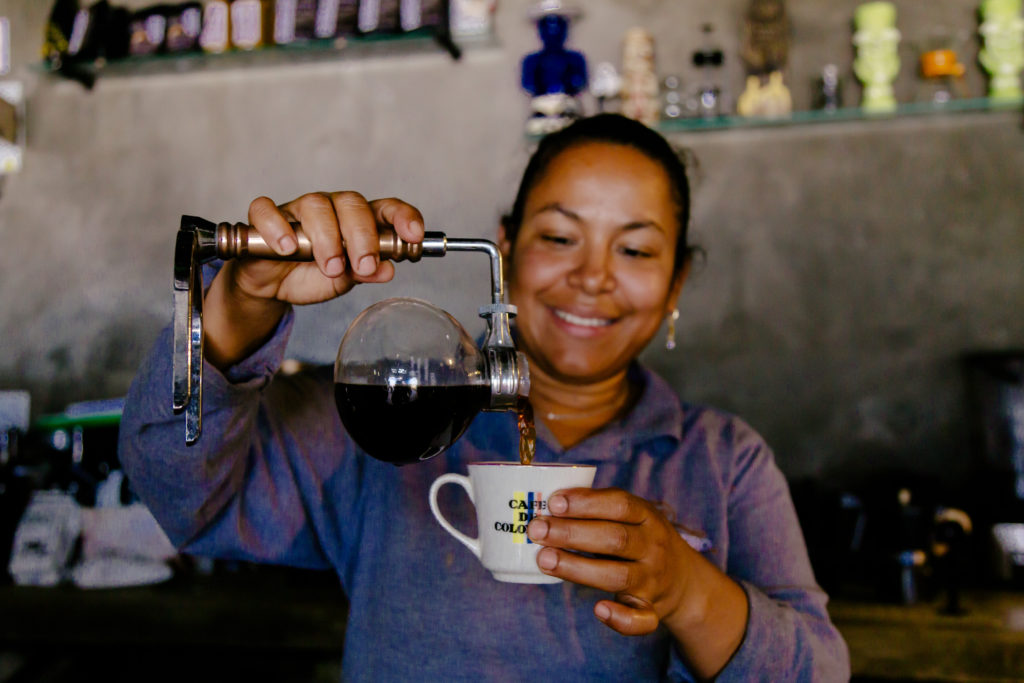
Coffee
Coffee is undoubtedly the most recognized Colombian product in the world. It’s the drink par excellence in Medellín, from our muleteers to our greatest entrepreneurs.
No matter how big or small, there’s always a cup of coffee available at any time of the day. Large-scale cultivation began in the former State of Antioquia in 1880. Since then, our coffee has grown, gaining a special place within the Colombian coffee varieties.
One of the most curious and appealing aspects of the coffee of our region is that we don’t have large coffee plantations; in fact, our coffee comes from small cultivations belonging to humble farmers, which means that more care is taken in cultivating and harvesting the beans than in any other region.

Chicharrón
There are foods that are highly appreciated by the culture and tastes of its inhabitants; in this sense, we can say that pork is one of the major foods in Medellín. In this city, an average of 26 kilos per person is consumed each year, while in the rest of Colombia this figure only reaches 8 kilos.
Chicharrón is one of the main contributors to this level of consumption. It was introduced in the region around 1530 and quickly became part of the Creole and indigenous diet. In the 10th century, the consumption of this animal protein became popular in many recipes and celebrations. Production technology has made it easier to increase its supply, resulting in different variations: smoked chicharrón, with sauce reduction, in syrup, in long or short cuts, roasted, or meaty.

Fríjoles
Beans are the star ingredient and the most representative dish of our culture. They’re a vital part of our history and a basic element of the daily diet of our city. They can be eaten in countless combinations and at any time of the day. At breakfast, a calentao can be the starting point for a day full of energy. At noon, a lunch with beans is quite common, as they are the central ingredient of the bandeja paisa. And at night, there is nothing better than a bean stew.
After corn, beans are the second greatest treasure that the American continent has contributed to humanity, and in Medellín we pay tribute to this great diversity.
Surely every family in the city remembers some gathering with their grandparents to share some beans on a weekend. Each family, restaurant, or chef in our city has a formula, making it impossible to create a unified flavor. This is why this secret becomes the jewel of each family group. There’s no way to know which recipe is the best. However, you’ll have the pleasure of discovering it.
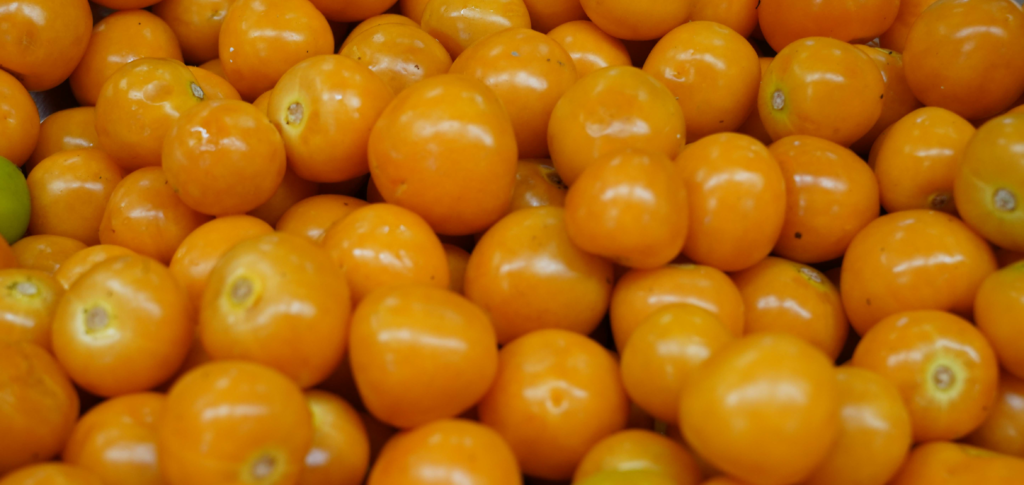
Fruits
We’re tropical, we’re colorful, we have flavor, and the best place to find a living example of each of these features is the unique variety of exotic fruits available in our territory.
To surprise the most sensitive senses, sight is immersed in almost surreal colors, hands feel the textures that approach fiction, to finally allow taste and smell to discover hundreds of varieties of soursop, banana, passionfruit, blackberry, dragon fruit, lulo, and tamarillo.
Fresh, citric, salty, sour, sweet, strong, soft—many of them grown by small farmers—fruits are a treasure that your body demands and enjoys without limitations when you arrive in Medellín.
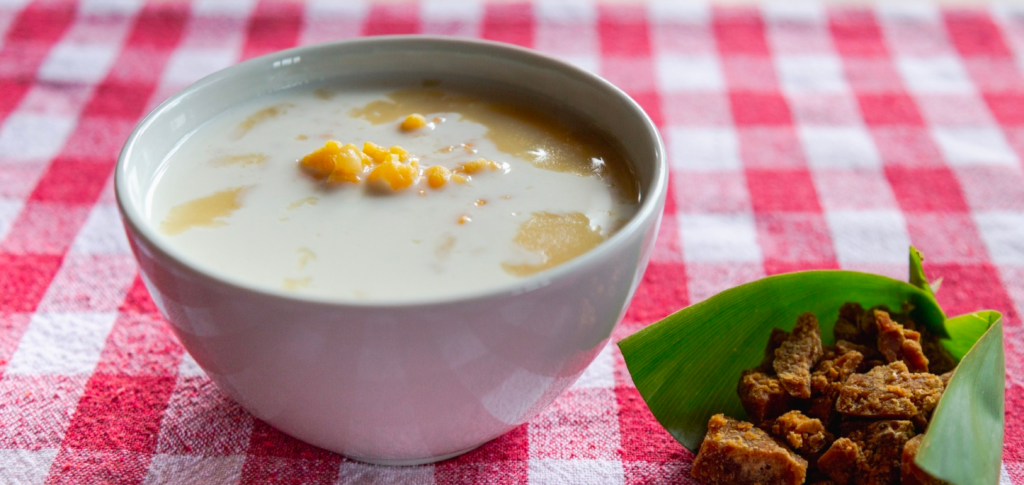
Mazamorra
It’s a tribute to the most important food that America has given to the world: corn. This cereal was the true treasure encountered by the conquistadors in our continent. Mazamorra is a delicious and unique dish, included in the category of cereal-type desserts, similar to rice pudding, but with the typical sweetness of corn.
Mazamorra has its origins in colonial Colombia, when corn was put in milk cans under the heat of firewood until it softened. It was then sweetened with panela (sugar cane), sugar, or cinnamon. It was considered a true delicacy of the gods. People also believed that mazamorra possessed body and spirit.
For generations, mazamorra has been the perfect closure to the working day around the table or in the verandas of rural homes.
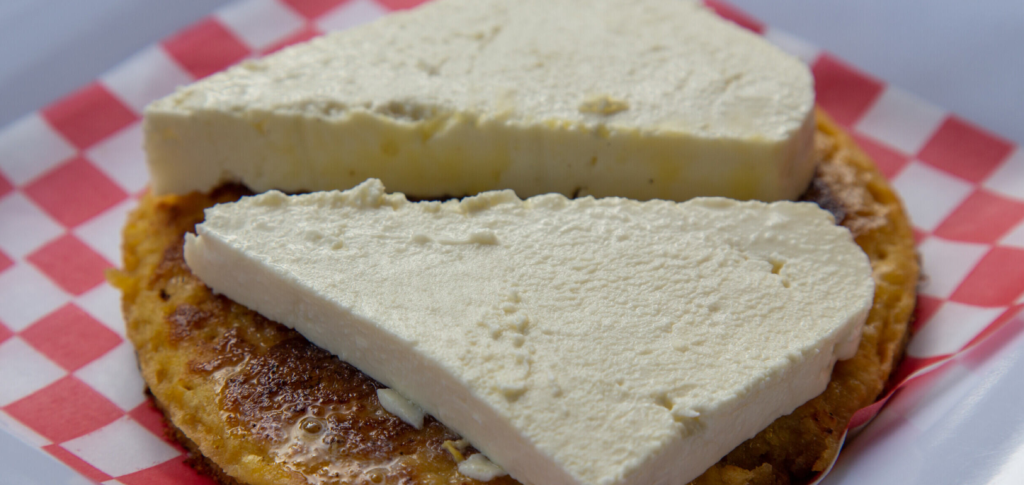
Quesito
Quesito (or soft cheese) is a great gastronomic secret for national and international tourists and has become the ideal companion for arepas. It’s an essential part of the daily diet of residents and visitors of Medellín. It’s part of the cow-derived fresh cheeses, made with fresh milk and rennet. When it’s ground and not pressed, it becomes a unique product. Originally from this area of the country, it’s widely consumed throughout the city and the department. Our farmers used to make it by hand, and after wrapping it in bijao or plantain leaves, they sold it in the city’s markets.
In Colombia we have 12 varieties of cheese: Paipa cheese, Caquetá cheese, quesillo tolimense, costeño cheese, among others, including the quesito from Medellín.
Arepas
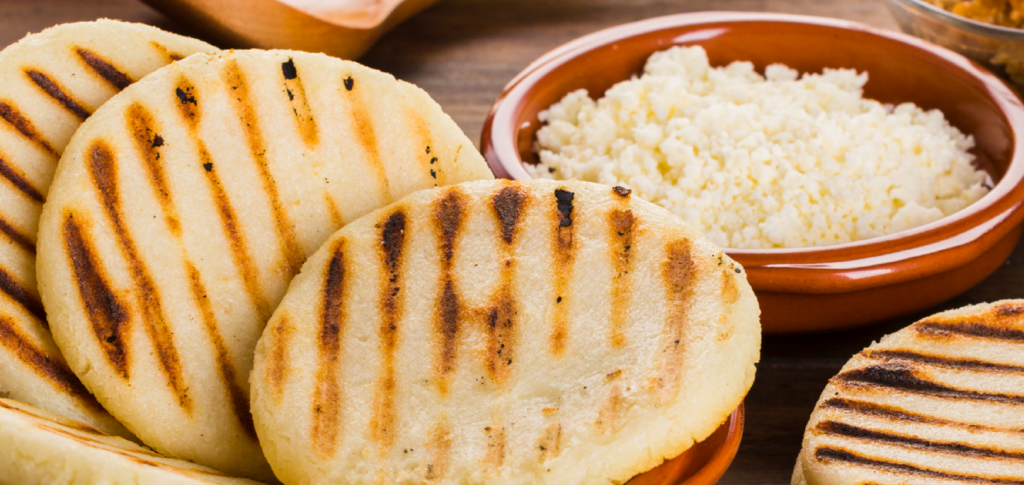
It’s perhaps the best and most diverse symbol of Medellín’s gastronomy and certainly a fundamental part of the DNA of our city. It’s easy preparation, widely consumed ingredients, and reasonable cost make it the best companion for all our traditional dishes. Corn is perhaps one of the greatest gastronomic legacies of our indigenous ancestors that managed to spread throughout Latin America. It’s consumed daily and can be combined with almost any food: meat, fish, chicken, vegetables, cheese, or just with butter and salt. Arepa is the queen of Antioquian gastronomy.
Nowadays, we can find the white arepa paisa, sweet corn arepa, arepa de arriero, arepa de mote, among others.
Empanada
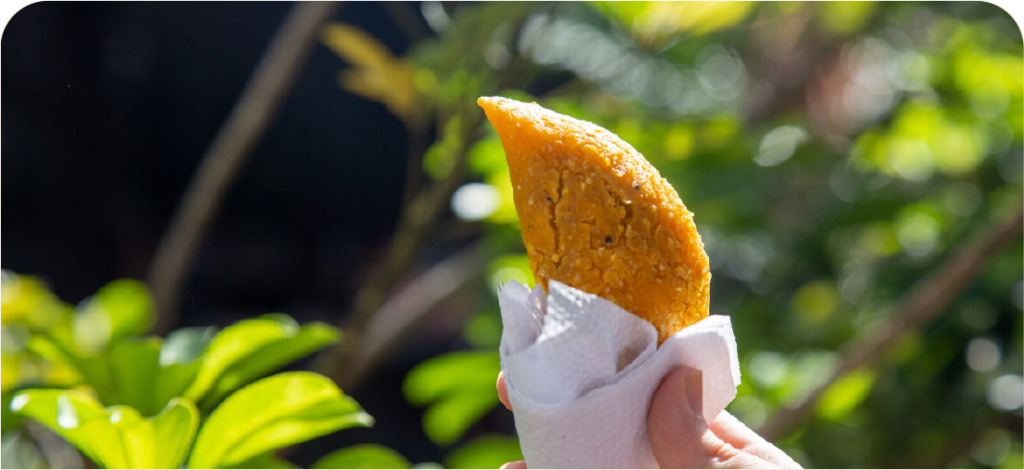
Although the arepa holds a place of honor in the gastronomy of Antioquia, this region has its own version of empanadas. Its dough is extremely thin, and its most common fillings are potato and meat. However, it’s increasingly common to find empanadas with flavors typical of other dishes from the region, such as plantain empanadas or with beans and chicharrón.
This food is a must in neighborhood stores and traditional Paisa diners, where local farmers and ranchers gather at lunchtime or in the afternoon.
Empanadas are usually served with a cup of coffee or a soda, and are eaten as a snack, a quick meal, or even as an alternative to lunchtime.
Tamal
Tamales undoubtedly reflect moments of celebration and festivity. There’s no dish that brings to mind more moments of hope, joy, family unity, and hospitality. Every time there are tamales, Paisas always invite their loved ones to celebrate.
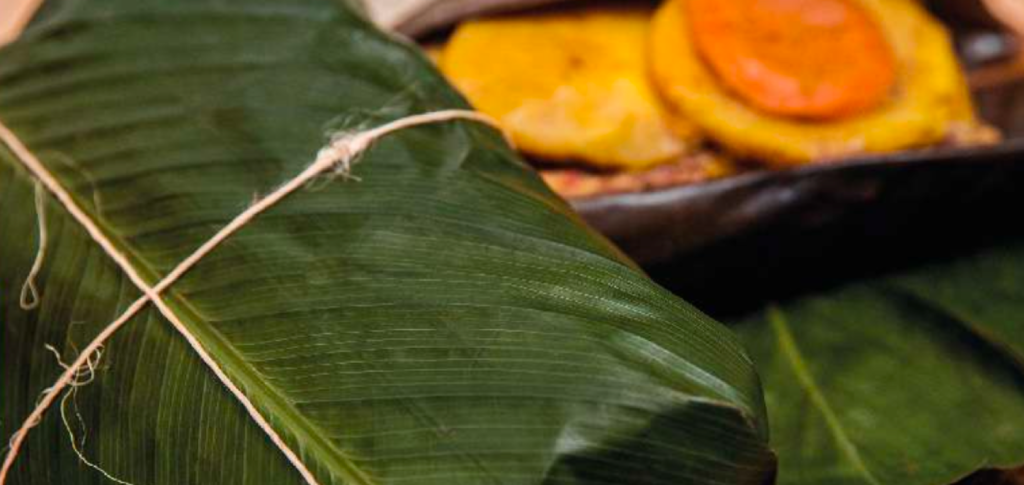
With a very striking presentation—wrapped with a plantain or bijao leaf—the tamale has an exquisite combination of ingredients that are revealed when you cut the strings and remove the leaf. The dough of our tamale is made entirely of corn and its shape is usually rectangular, filled with pork ribs, potatoes, peas, carrots, and other vegetables. It’s served of course with an unsalted white arepa and a cup of hot chocolate.
It’s perhaps a mythical dish in our culture: The indigenous people who inhabited this region always believed that nature was the greatest source of wealth and properties. That’s why they considered that by cooking tamales wrapped in leaves Mother Earth passed on its goodness to the food.

Solterita
Even on a tight budget, there’s always enough for a solterita. This is a subtle pleasure that can be found in some streets, neighborhoods, and very frequently outside schools in Medellín. This flavor is passed down from generation to generation, evoking childhood memories and surprising visitors with its unique taste. It’s a cookie made of wheat flour, coloring and sugar; and its shape and color are already part of the local culture. After frying, it gets its crunchy texture on which the cream is spread. If you like, you can add condensed milk on top of the cream.
Coffee
Coffee is undoubtedly the most recognized Colombian product in the world. It’s the drink par excellence in Medellín, from our muleteers to our greatest entrepreneurs.
No matter how big or small, there’s always a cup of coffee available at any time of the day. Large-scale cultivation began in the former State of Antioquia in 1880. Since then, our coffee has grown, gaining a special place within the Colombian coffee varieties.
One of the most curious and appealing aspects of the coffee of our region is that we don’t have large coffee plantations; in fact, our coffee comes from small cultivations belonging to humble farmers, which means that more care is taken in cultivating and harvesting the beans than in any other region.
Chicharrón
There are foods that are highly appreciated by the culture and tastes of its inhabitants; in this sense, we can say that pork is one of the major foods in Medellín. In this city, an average of 26 kilos per person is consumed each year, while in the rest of Colombia this figure only reaches 8 kilos.
Chicharrón is one of the main contributors to this level of consumption. It was introduced in the region around 1530 and quickly became part of the Creole and indigenous diet. In the 10th century, the consumption of this animal protein became popular in many recipes and celebrations. Production technology has made it easier to increase its supply, resulting in different variations: smoked chicharrón, with sauce reduction, in syrup, in long or short cuts, roasted, or meaty.
Fríjoles
Beans are the star ingredient and the most representative dish of our culture. They’re a vital part of our history and a basic element of the daily diet of our city. They can be eaten in countless combinations and at any time of the day. At breakfast, a calentao can be the starting point for a day full of energy. At noon, a lunch with beans is quite common, as they are the central ingredient of the bandeja paisa. And at night, there is nothing better than a bean stew.
After corn, beans are the second greatest treasure that the American continent has contributed to humanity, and in Medellín we pay tribute to this great diversity.
Surely every family in the city remembers some gathering with their grandparents to share some beans on a weekend. Each family, restaurant, or chef in our city has a formula, making it impossible to create a unified flavor. This is why this secret becomes the jewel of each family group. There’s no way to know which recipe is the best. However, you’ll have the pleasure of discovering it.
Fruits
We’re tropical, we’re colorful, we have flavor, and the best place to find a living example of each of these features is the unique variety of exotic fruits available in our territory.
To surprise the most sensitive senses, sight is immersed in almost surreal colors, hands feel the textures that approach fiction, to finally allow taste and smell to discover hundreds of varieties of soursop, banana, passionfruit, blackberry, dragon fruit, lulo, and tamarillo.
Fresh, citric, salty, sour, sweet, strong, soft—many of them grown by small farmers—fruits are a treasure that your body demands and enjoys without limitations when you arrive in Medellín.
Mazamorra
It’s a tribute to the most important food that America has given to the world: corn. This cereal was the true treasure encountered by the conquistadors in our continent. Mazamorra is a delicious and unique dish, included in the category of cereal-type desserts, similar to rice pudding, but with the typical sweetness of corn.
Mazamorra has its origins in colonial Colombia, when corn was put in milk cans under the heat of firewood until it softened. It was then sweetened with panela (sugar cane), sugar, or cinnamon. It was considered a true delicacy of the gods. People also believed that mazamorra possessed body and spirit.
For generations, mazamorra has been the perfect closure to the working day around the table or in the verandas of rural homes.
Quesito
Quesito (or soft cheese) is a great gastronomic secret for national and international tourists and has become the ideal companion for arepas. It’s an essential part of the daily diet of residents and visitors of Medellín. It’s part of the cow-derived fresh cheeses, made with fresh milk and rennet. When it’s ground and not pressed, it becomes a unique product. Originally from this area of the country, it’s widely consumed throughout the city and the department. Our farmers used to make it by hand, and after wrapping it in bijao or plantain leaves, they sold it in the city’s markets.
In Colombia we have 12 varieties of cheese: Paipa cheese, Caquetá cheese, quesillo tolimense, costeño cheese, among others, including the quesito from Medellín.
Arepas
It’s perhaps the best and most diverse symbol of Medellín’s gastronomy and certainly a fundamental part of the DNA of our city. It’s easy preparation, widely consumed ingredients, and reasonable cost make it the best companion for all our traditional dishes. Corn is perhaps one of the greatest gastronomic legacies of our indigenous ancestors that managed to spread throughout Latin America. It’s consumed daily and can be combined with almost any food: meat, fish, chicken, vegetables, cheese, or just with butter and salt. Arepa is the queen of Antioquian gastronomy.
Nowadays, we can find the white arepa paisa, sweet corn arepa, arepa de arriero, arepa de mote, among others.
Empanada
Although the arepa holds a place of honor in the gastronomy of Antioquia, this region has its own version of empanadas. Its dough is extremely thin, and its most common fillings are potato and meat. However, it’s increasingly common to find empanadas with flavors typical of other dishes from the region, such as plantain empanadas or with beans and chicharrón.
This food is a must in neighborhood stores and traditional Paisa diners, where local farmers and ranchers gather at lunchtime or in the afternoon.
Empanadas are usually served with a cup of coffee or a soda, and are eaten as a snack, a quick meal, or even as an alternative to lunchtime.
Tamal
Tamales undoubtedly reflect moments of celebration and festivity. There’s no dish that brings to mind more moments of hope, joy, family unity, and hospitality. Every time there are tamales, Paisas always invite their loved ones to celebrate.
With a very striking presentation—wrapped with a plantain or bijao leaf—the tamale has an exquisite combination of ingredients that are revealed when you cut the strings and remove the leaf. The dough of our tamale is made entirely of corn and its shape is usually rectangular, filled with pork ribs, potatoes, peas, carrots, and other vegetables. It’s served of course with an unsalted white arepa and a cup of hot chocolate.
It’s perhaps a mythical dish in our culture: The indigenous people who inhabited this region always believed that nature was the greatest source of wealth and properties. That’s why they considered that by cooking tamales wrapped in leaves Mother Earth passed on its goodness to the food.
Solterita
Even on a tight budget, there’s always enough for a solterita. This is a subtle pleasure that can be found in some streets, neighborhoods, and very frequently outside schools in Medellín. This flavor is passed down from generation to generation, evoking childhood memories and surprising visitors with its unique taste. It’s a cookie made of wheat flour, coloring and sugar; and its shape and color are already part of the local culture. After frying, it gets its crunchy texture on which the cream is spread. If you like, you can add condensed milk on top of the cream.
Traditional Cuisine
Prepare for an unforgettable culinary journey in Medellín! The traditional cuisine of this city will surprise you with its authentic and diverse flavor. You can’t miss the bandeja paisa, a hearty dish with meat, rice, beans, eggs, avocado, and fried ripe plantains. Are you a soup lover? The mondongo soup, Colombian omelet soup, and patacón soup are options you’ll find in restaurants that specialize in traditional food as well as in simple restaurants that offer daily set menus.
- Don’t forget to try arepas with cheese, sweet corn fritters, or empanadas. No matter if you’re in a tourist, commercial, or residential area, we promise that each and every neighborhood has its own empanadas and arepas for sale.
- If you’re a coffee lover, you’ll find paradise in Medellín. Visit a coffee farm and discover the coffee production process, or try innovative desserts and beverages that include coffee.
- When we say that bandeja paisa is big, we’re not exaggerating; if you’re not a fan of large quantities, ask for half portions.
We do love dessert after lunch, so you can go for the traditional fruit desserts; try the guava paste with cheese and mazamorra in traditional restaurants.
Cafés and Coworking Spaces
Medellín is the perfect place for coffee lovers and digital nomads! Discover a vibrant scene of coffee shops and coworking spaces that allow you to combine work and pleasure in an exceptional way.
Start your day with breakfast in a cozy café in Provenza, Manila, or Laureles. The aroma of freshly brewed coffee will seduce you. Then, head to a coworking space in Ciudad del Río, most of our shopping malls, or the Perpetuo Socorro creative district, where you’ll find a warm atmosphere and a community of professionals like you.
In the afternoon, you can visit the cafés of museums and theaters for a cup of special coffee and to plan your next steps. There are also trendy bookstore cafés where you can concentrate and enjoy delicious desserts and pastries.
Take the opportunity to explore the city after work; Medellín offers a wide range of cultural and recreational activities. The combination of cozy cafés and coworking spaces with cultural and recreational programming gives you the perfect balance to be productive and enjoy the beauty of the city. Welcome to your second home!
International Cuisine
International cuisine in Medellín has grown exponentially in recent years. Discover a wide range of culinary options that will take you around the world. Ranging from exquisite ramen to authentic Italian food, you’ll find restaurants to satisfy every palate! You can also find great Mexican, Peruvian, and Argentinean cuisine, in case you prefer the flavors of our Latin American neighbors.
Manila, Provenza, and Laureles are the neighborhoods where you can make this global culinary journey without leaving the city. So go ahead and enjoy an international gastronomic experience in Medellín.
Gastronomic Markets
We recommend two types of food markets in Medellín, although in essence they’re completely different. First, we invite you to explore the market squares, where the magic of gastronomy begins. Explore the culinary essence of Medellín in Plaza Minorista, Placita de Floréz, and Plaza de La América! Taste fruits you might not have known before, enjoy the wide range of options we have in the tropics, sit down for breakfast or lunch, and hear first-hand the stories of the cooks.
On the other hand, there are the so-called gastronomic markets, a new trend that brings together restaurants and bars in a single space preserving some informality of the market squares. Mercados de la Playa, Mercados del Río, and Mercados de Laureles represent this trend. Located in different sectors of the city, they offer a lively atmosphere, traditional and international dishes, and tables to share. You can also enjoy cocktails, infused sparkling waters, and wines. Come and experience a different way of tasting in Medellín’s market squares and gastronomic markets!
Signature Cuisine
Indulge yourself in innovative signature cuisine in Medellín! Immerse yourself in creative dishes designed by talented chefs who combine tradition with avant-garde cuisine in places like El Cielo, Alambique, Sambombi Bistró, Kai, and Carmen. If you’re into cooking labs, different menus every two months, and exploring the senses, you can find tasting options in Medellín that will take you on an unforgettable gastronomic journey with just a bite. Each dish is a work of art that awakens your senses and connects you with the richness of the region.
- Most of these signature restaurants are in Provenza. To be sure, check first whether reservations are required.
- Try the Colombian traditional flavors taken to other culinary universes through exploration and research.
- Here’s a practical idea to help you decide on dishes with a lot of unfamiliar ingredients: Just say yes if it has patacón, avocado, toasted corn, ripe plantain, cheese, passion fruit reduction, or cassava crust. We love those at Medellín Travel.
Accede gratis a las guías de Medellín
Completa tus datos una sola vez y descarga todas las guías para planear tu experiencia en la ciudad.
¿Planeamos tu viaje a Medellín?
¡Fácil y rápido! Elige tus intereses y te damos un plan listo para disfrutar Medellín.