WE ARE AN OPEN CITY FOR EVERYONE
Accessible and inclusive tourism in the heart of Medellín
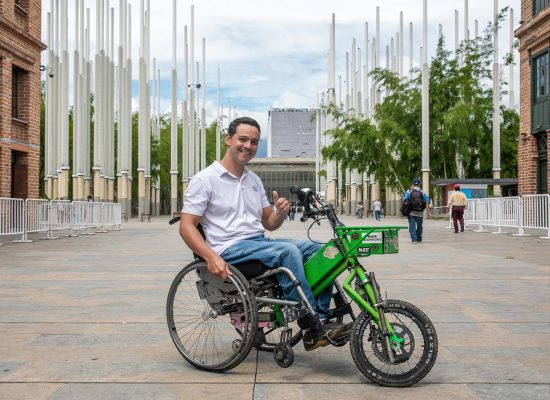
Accessible and inclusive tourism in Medellín has made the city worthy of national recognition, among many other things, thanks to its inclusion policies. Accessible tourism represents the elimination of physical, sensory, or communication barriers; and at the same time, the generation of tourist spaces, environments, products, and/or services that can be enjoyed under equal conditions by anyone with or without disabilities. This perspective includes the elimination of social and economic barriers.
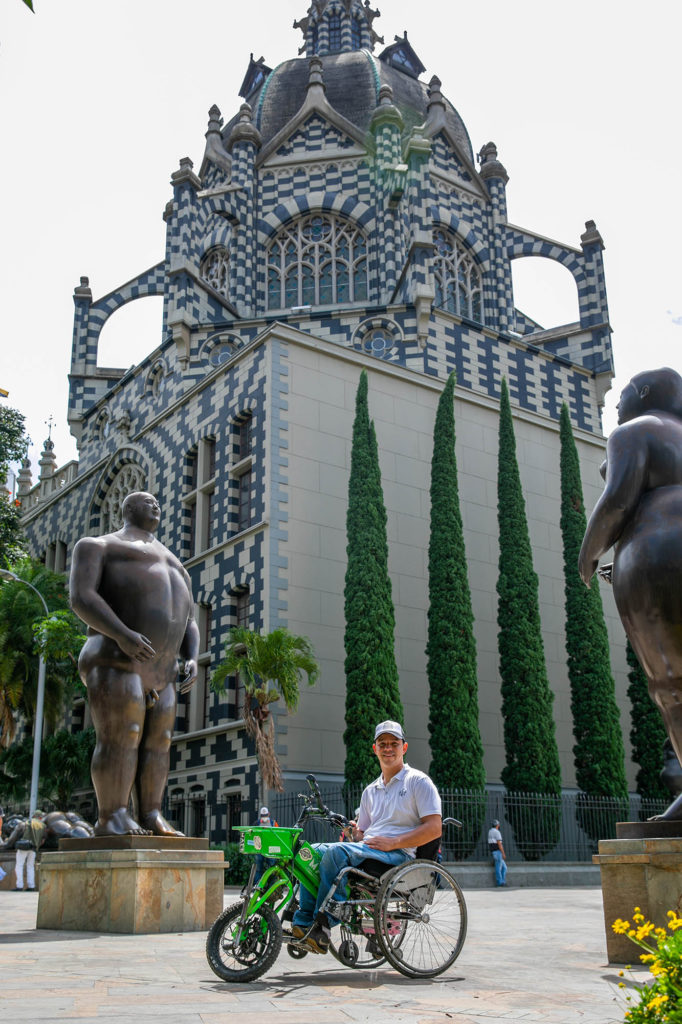
Medellín has been transforming, allowing anyone, in any condition, to walk its streets and visit its tourist attractions in an easy, safe, comfortable, and efficient way. These transformations have encouraged locals and visitors to go out, know, and enjoy the unique places found in the city. Get to know them and remember that they are open and willing for your enjoyment and learning, some of them are:
Passages in the Center of Medellín
In Medellín, you can enjoy several passages in which you can find local shops with gastronomy, crafts, textile offers, and much more.
In its remodeling, signage has been a very important issue; Well, from the tactile guides and the intelligent traffic lights to the ramps and wide spaces; all visitors are allowed to fully enjoy the experience of these places designed for recreation.
Bolívar passage invites you to take a quiet tour in which it is possible to take a few breaks in the spaces designated for it. This place is one of the newest public space interventions in the city center. Passages Carabobo and Junín are more designed for shopping, however, they are a perfect setting to discover and experience the dynamics of the city from the proximity and direct interaction with the locals.
Botero Square
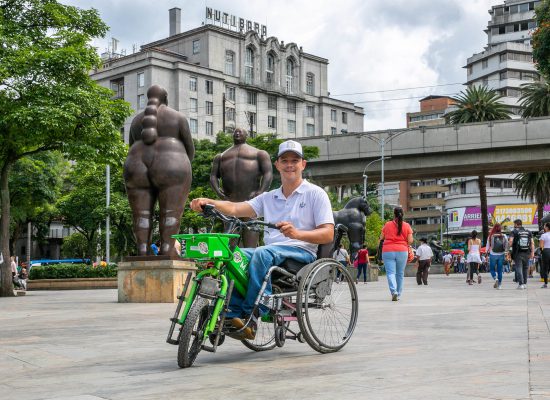
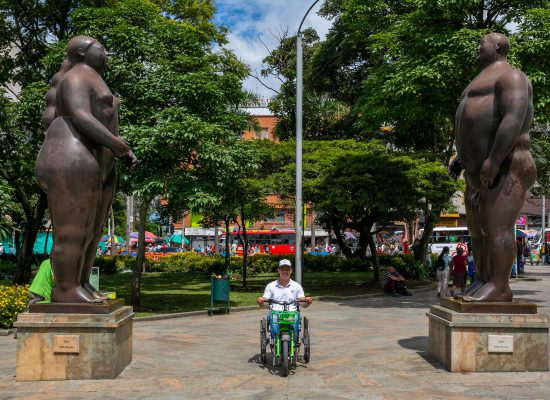
Botero Square is a very important place for Medellinians, an open-air museum and without a doubt, one of the meeting points for the greatest socialization in the Center of Medellín. This space is arranged for all people to visit, it has the necessary equipment for people with reduced mobility. Likewise, being a museum that is located in a square, it invites those who have not had the opportunity to visit one, to get closer to art through public space.
Medellín Botanical Garden
Its architectural spaces and the tranquility that it feels to be in this place represent a permanent invitation to all people who want to connect with nature and learn a little about the infinite biodiversity that our country has. This through a space of 13.2 hectares full of living collections of plants, designed for everyone, which manages to break any type of barrier, be it mobility and/or economic.
Desires Park
This urban park manages to create a synergy between cultural and social differences since it gathers many purposes in one place; from being a suitable space for artistic activities such as concerts, film screenings, and workshops, to be a pleasant place for rest and passive recreation in the middle of the city. The Desires Park is a cultural meeting center for all tastes, arranged and suitable in an accessible way, both for people with any type of mobility limitation and with free access so that everyone, locals and visitors, can enjoy this space that hides great lessons, as well as lots of fun.
Barefoot Park
Barefoot Park is a thematic space that seeks to sensitize its visitors “starting with their feet and ending with their spirit.” This space open to the public, has specialized guides, who from their experience and knowledge will take you through a magical world between nature and science. With its ramps and accesses designed for everyone, you can enjoy this urban oasis without any limitation.
Explora Park
This interactive museum in the northern part of the city invites all people to enter the world of science and technology in a dynamic and creative way. Looking for the impact of a greater number of people; boys and girls under 2 years of age, people with disabilities, and residents of neighborhoods in strata 1, 2, and 3 of Medellín enter free; the latter, presenting the utility bill.
Medellín Planetarium
The Medellín Planetarium invites the “wanderers of the universe” to enter the world of space and Earth science with 42 interactive experiences and a digital dome. Usually, the entrance has a cost of $ 17,000 COP (5 dollars approximately), however, and consistent with its inclusion and accessibility policies, for people with disabilities and inhabitants of neighborhoods of strata 1, 2, and 3 of the city, the entrance is also free by presenting the utility bill.
House of Memory Museum
House of Memory Museum takes a journey through the history of the armed conflict in Colombia, the culture of peace, and the reparation processes, seeking to rediscover hope and contribute to the cultural transformation of the country. The house has free admission and you can visit multiple rotating exhibitions and other fixed ones. Likewise, you can enjoy guided tours that have all the infrastructure for the mobilization of people with disabilities.
Museum of Antioquia
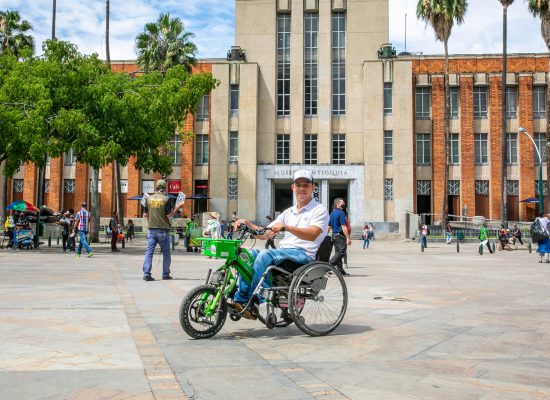
In the Museum of Antioquia, neighboring Botero Square, it is possible to contemplate the art of the most outstanding artists of the region and the country. Like other tourist and cultural places in the city, it has chosen to offer free admission to people from strata 1, 2, and 3 of the city, when presenting the utility bill.
Likewise, the accessibility of this space is reflected from the entrance where you can also find a ramp on its side for the mobility of people who have some type of limitation.
Water museum
The Medellín Water Museum is a space in which you will learn everything related to this vital resource through an interactive adventure. It also offers free admission to people who live in neighborhoods of socioeconomic strata 1, 2 or 3, presenting the utility bill.
All these places are strategically located to finally be connected by the city’s public transport system par excellence, the Medellín Metro, which has a system that with its commitment to sustainable mobility, has sought since its creation to generate social impact, among other things, due to its principle of accessibility, from the cost of the services it provides to its infrastructure.
Other bets of accessible and inclusive tourism
Millon Art, Drink & Food Restaurant
Colombia’s first sensorial and inclusive cafe/restaurant located in Barrio La Candelaria. At the Millon Art, Drink & Food Restaurant you will live a unique experience from start to finish, as the place is attended by people with hearing and visual disabilities. There, sign language is the universal language, and while you place your order you will have the opportunity to learn it a little.
Rituals Cafe
¨We are the cafe of Barrio La Sierra¨, this is the phrase that can be read on one of the walls of the café located in Barrio Laureles and which fondly commemorates that its coffee is grown in a neighborhood that for many years had to live together with urban warfare. Its name, which seems more like a poem, is inspired by the ritual that represents the process of drinking a very good quality coffee, from the harvest to the cup.
Crepes and Waffles Restaurant
This restaurant, which today has headquarters in five countries, has achieved great recognition for its philosophy of inclusion that ranges from hiring women heads of household, as well as people in difficult conditions, whether economic, political and/or social groups, people displaced, demobilized or affected by some type of violence.
This restaurant chain seeks to generate opportunities and value all the capabilities that people have in any type of condition. You can see the 28 locations of the Crepes and Waffles restaurant in Medellín here.
Accessible tourism through inclusive tours
The streets of the city center witness the passage of a nightly express each night, one that with a handful of tourists travels its streets, avenues, and historical sites to promote a more inclusive tourism in Medellín and to redefine some places that although tourists traditionally visit little, they invite resilience and inclusion through discovering, inhabiting and recognizing them.
This tour made by Medellín Galería Tour is carried out in a very special way, as it provides an inclusive experience; making sure to visit places with the necessary infrastructure so that anyone, with or without disabilities, can enjoy the tour in a quiet and enjoyable way.
If you dare to do one of these tours, you must contact Manuel Córdoba. He has every corner of Medellín in his head and will surely lead you to understand the past and the social context of the city first hand. You can contact him on the cell phone +57 321 6464770.
Semilleros Network
Another way in which Medellín Galería Tour promotes inclusive tourism is through its Network of Semilleros, through which they train community guides and people with reduced mobility in languages, history, art, and architecture to accompany visitors through this express that runs through the heart of the city.
All these advances in accessible tourism have been achieved thanks to the union of public and private entities, and people in general; that every day they are more aware of the importance of the fact that everyone can walk their streets, know their stories, engage in meaningful conversations and generate transformative actions without any type of barrier.
The union of all these efforts has materialized in important projects that present a tourist offer designed for everyone.
Read also: Community Tourism, another view of Medellín.
Accessibility
Visually Pleasing Experience
Accessibility Statement
- www.medellin.travel
- July 27, 2026
Compliance status
We firmly believe that the internet should be available and accessible to anyone, and are committed to providing a website that is accessible to the widest possible audience, regardless of circumstance and ability. To fulfill this, we aim to adhere as strictly as possible to the World Wide Web Consortium’s (W3C) Web Content Accessibility Guidelines 2.1 (WCAG 2.1) at the AA level. These guidelines explain how to make web content accessible to people with a wide array of disabilities. Complying with those guidelines helps us ensure that the website is accessible to all people: blind people, people with motor impairments, visual impairment, cognitive disabilities, and more. This website utilizes various technologies that are meant to make it as accessible as possible at all times. We utilize an accessibility interface that allows persons with specific disabilities to adjust the website’s UI (user interface) and design it to their personal needs. Additionally, the website utilizes an AI-based application that runs in the background and optimizes its accessibility level constantly. This application remediates the website’s HTML, adapts Its functionality and behavior for screen-readers used by the blind users, and for keyboard functions used by individuals with motor impairments. If you’ve found a malfunction or have ideas for improvement, we’ll be happy to hear from you. You can reach out to the website’s operators by using the following emailScreen-reader and keyboard navigation
Our website implements the ARIA attributes (Accessible Rich Internet Applications) technique, alongside various different behavioral changes, to ensure blind users visiting with screen-readers are able to read, comprehend, and enjoy the website’s functions. As soon as a user with a screen-reader enters your site, they immediately receive a prompt to enter the Screen-Reader Profile so they can browse and operate your site effectively. Here’s how our website covers some of the most important screen-reader requirements, alongside console screenshots of code examples:- Screen-reader optimization: we run a background process that learns the website’s components from top to bottom, to ensure ongoing compliance even when updating the website. In this process, we provide screen-readers with meaningful data using the ARIA set of attributes. For example, we provide accurate form labels; descriptions for actionable icons (social media icons, search icons, cart icons, etc.); validation guidance for form inputs; element roles such as buttons, menus, modal dialogues (popups), and others. Additionally, the background process scans all of the website’s images and provides an accurate and meaningful image-object-recognition-based description as an ALT (alternate text) tag for images that are not described. It will also extract texts that are embedded within the image, using an OCR (optical character recognition) technology. To turn on screen-reader adjustments at any time, users need only to press the Alt+1 keyboard combination. Screen-reader users also get automatic announcements to turn the Screen-reader mode on as soon as they enter the website.These adjustments are compatible with all popular screen readers, including JAWS and NVDA.
- Keyboard navigation optimization: The background process also adjusts the website’s HTML, and adds various behaviors using JavaScript code to make the website operable by the keyboard. This includes the ability to navigate the website using the Tab and Shift+Tab keys, operate dropdowns with the arrow keys, close them with Esc, trigger buttons and links using the Enter key, navigate between radio and checkbox elements using the arrow keys, and fill them in with the Spacebar or Enter key.Additionally, keyboard users will find quick-navigation and content-skip menus, available at any time by clicking Alt+1, or as the first elements of the site while navigating with the keyboard. The background process also handles triggered popups by moving the keyboard focus towards them as soon as they appear, and not allow the focus drift outside of it.Users can also use shortcuts such as “M” (menus), “H” (headings), “F” (forms), “B” (buttons), and “G” (graphics) to jump to specific elements.
Disability profiles supported in our website
- Epilepsy Safe Mode: this profile enables people with epilepsy to use the website safely by eliminating the risk of seizures that result from flashing or blinking animations and risky color combinations.
- Visually Impaired Mode: this mode adjusts the website for the convenience of users with visual impairments such as Degrading Eyesight, Tunnel Vision, Cataract, Glaucoma, and others.
- Cognitive Disability Mode: this mode provides different assistive options to help users with cognitive impairments such as Dyslexia, Autism, CVA, and others, to focus on the essential elements of the website more easily.
- ADHD Friendly Mode: this mode helps users with ADHD and Neurodevelopmental disorders to read, browse, and focus on the main website elements more easily while significantly reducing distractions.
- Blindness Mode: this mode configures the website to be compatible with screen-readers such as JAWS, NVDA, VoiceOver, and TalkBack. A screen-reader is software for blind users that is installed on a computer and smartphone, and websites must be compatible with it.
- Keyboard Navigation Profile (Motor-Impaired): this profile enables motor-impaired persons to operate the website using the keyboard Tab, Shift+Tab, and the Enter keys. Users can also use shortcuts such as “M” (menus), “H” (headings), “F” (forms), “B” (buttons), and “G” (graphics) to jump to specific elements.
Additional UI, design, and readability adjustments
- Font adjustments – users, can increase and decrease its size, change its family (type), adjust the spacing, alignment, line height, and more.
- Color adjustments – users can select various color contrast profiles such as light, dark, inverted, and monochrome. Additionally, users can swap color schemes of titles, texts, and backgrounds, with over 7 different coloring options.
- Animations – epileptic users can stop all running animations with the click of a button. Animations controlled by the interface include videos, GIFs, and CSS flashing transitions.
- Content highlighting – users can choose to emphasize important elements such as links and titles. They can also choose to highlight focused or hovered elements only.
- Audio muting – users with hearing devices may experience headaches or other issues due to automatic audio playing. This option lets users mute the entire website instantly.
- Cognitive disorders – we utilize a search engine that is linked to Wikipedia and Wiktionary, allowing people with cognitive disorders to decipher meanings of phrases, initials, slang, and others.
- Additional functions – we provide users the option to change cursor color and size, use a printing mode, enable a virtual keyboard, and many other functions.
Browser and assistive technology compatibility
We aim to support the widest array of browsers and assistive technologies as possible, so our users can choose the best fitting tools for them, with as few limitations as possible. Therefore, we have worked very hard to be able to support all major systems that comprise over 95% of the user market share including Google Chrome, Mozilla Firefox, Apple Safari, Opera and Microsoft Edge, JAWS and NVDA (screen readers), both for Windows and for MAC users.Notes, comments, and feedback
Despite our very best efforts to allow anybody to adjust the website to their needs, there may still be pages or sections that are not fully accessible, are in the process of becoming accessible, or are lacking an adequate technological solution to make them accessible. Still, we are continually improving our accessibility, adding, updating and improving its options and features, and developing and adopting new technologies. All this is meant to reach the optimal level of accessibility, following technological advancements. For any assistance, please reach out toRegístrate
Accede gratis a las guías de Medellín
Completa tus datos una sola vez y descarga todas las guías para planear tu experiencia en la ciudad.
¿Planeamos tu viaje a Medellín?
¡Fácil y rápido! Elige tus intereses y te damos un plan listo para disfrutar Medellín.